Caught Mouthing Along: The British Stars Who Finally Came Clean About Miming on Live TV
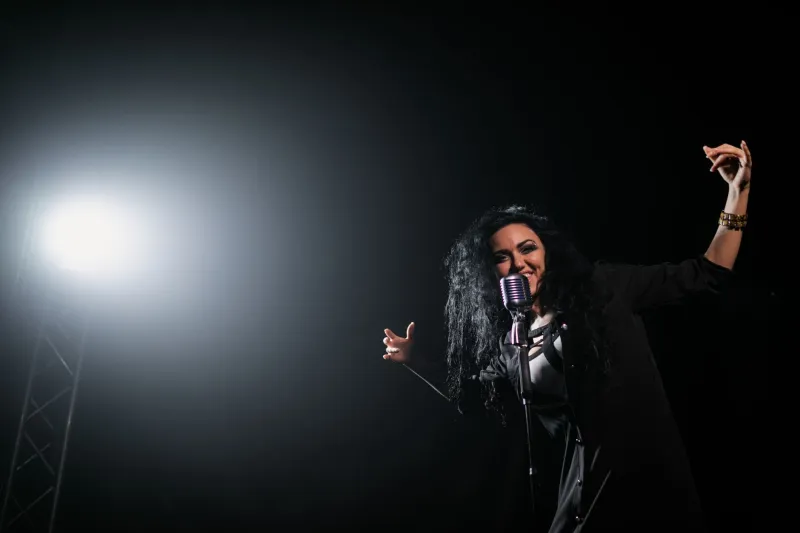
There's a moment every music fan dreads. You're watching your favourite act belt out a banger on a primetime telly special, and something just feels... off. The microphone drifts a good six inches from their mouth, but the vocals stay crystal clear. A coughing fit mid-chorus somehow doesn't interrupt a single note. The crowd goes wild. You go quiet. And somewhere in the back of your mind, you already know.
Miming on live television isn't new. It isn't even particularly scandalous by modern standards. But what has shifted in recent years is the willingness of British performers to actually admit it — and sometimes, to explain exactly why it happened.
The Industry's Worst-Kept Secret
Let's be honest: the practice of lip-syncing to a pre-recorded backing vocal has been baked into British entertainment since the earliest days of pop television. Shows like Top of the Pops famously required artists to perform to pre-recorded tracks as standard — it wasn't even considered a dirty secret, it was just how things were done. Musicians would often joke openly about it, barely bothering to move their mouths convincingly because, frankly, nobody expected them to.
But somewhere along the way, the rules changed. Live television started demanding live performance. Reality competition shows sold themselves on raw, unfiltered talent. Stadium concerts got beamed into living rooms across the country with the implicit promise of the real thing. And suddenly, miming went from an industry norm to a genuine source of shame.
The pressure to sound flawless while simultaneously dancing, emoting, and performing complex choreography for millions of viewers is, by any measure, enormous. And that pressure, according to many artists who've spoken out, is precisely what drives performers back to the safety of a backing track.
When the Confessions Started Coming
Some of the most candid admissions have come not from formal interviews, but from offhand social media posts and podcast appearances where artists clearly felt comfortable enough to let their guard down.
Several former reality TV contestants — the kind who went from Saturday night singing competitions to frantic promo schedules almost overnight — have spoken about being actively encouraged by management and production teams to mime during certain televised appearances. The reasoning, as it was explained to them, was almost depressingly practical: the vocal performance had already been perfected in the studio, so why risk a live wobble ruining the moment?
One recurring theme in these confessions is the sheer exhaustion factor. A newly signed pop act on a promotional blitz might be expected to perform the same song on breakfast television, a lunchtime magazine show, and a primetime entertainment special all within the same week — sometimes the same day. Asking a human voice to deliver a studio-quality performance under those conditions, repeatedly and on demand, is asking quite a lot.
The TV Specials That Raised Eyebrows
British viewers have always had a sharp eye for a suspicious performance. Comment sections and fan forums have, over the years, catalogued countless moments where something didn't quite add up — a breath that came too early, a harmony that sounded suspiciously identical to the album version, a microphone that appeared to be switched off entirely.
Christmas specials have historically been a hotbed of miming activity, with the festive telly schedule packed full of musical performances from acts who'd spent the previous month on tour and were, understandably, running on fumes. The unspoken agreement between broadcasters, artists, and audiences was that nobody would make too much of a fuss, provided the show looked the part.
That unspoken agreement started to crack when social media gave audiences a platform to compare notes in real time. Suddenly, viewers weren't just raising an eyebrow in their living room — they were clipping the suspicious moment, posting it online, and watching it rack up hundreds of thousands of views before the end credits had rolled.
Why Some Stars Are Now Choosing Honesty
What's genuinely interesting about the recent wave of miming confessions is the tone in which they're delivered. There's very little defensiveness. Most performers who've come clean seem almost relieved to get it out in the open, and several have been notably critical of the industry conditions that made miming feel like the only sensible option.
The conversation around vocal health has grown significantly in recent years, and with it, a greater public understanding that a singer's voice is a physical instrument that can be damaged by overuse, illness, or fatigue. When an artist explains that they were recovering from laryngitis, had just completed a forty-date tour, or had been told by their doctor not to sing — and that miming was presented as the only alternative to cancelling a high-profile appearance entirely — it's hard to work up much outrage.
There's also been a notable shift in how audiences respond to these admissions. Where once a miming scandal could derail a career — and there are certainly historical examples of that — the reaction now tends to be considerably more measured. Fans who've grown up watching behind-the-scenes content, reading candid interviews, and following their favourite artists on social media have a more nuanced understanding of the machinery behind a polished pop performance.
The Live TV Dilemma Isn't Going Away
For all the increased openness around the subject, miming remains a genuinely complicated issue for British television. Broadcasters want the spectacle of a live performance. Record labels want their artists to sound their best. And artists themselves are caught somewhere in the middle, trying to balance authenticity with the very real physical and professional pressures of delivering a perfect product.
Some performers have found creative middle grounds — using in-ear monitoring systems that allow them to blend live vocals with backing tracks in real time, or being upfront with audiences when a performance will involve elements of pre-recorded sound. Others have simply decided that the honest approach is the only one they're comfortable with, even if it means the odd bum note makes it to air.
The broader question, perhaps, is what audiences actually want. Because if the response to recent confessions is anything to go by, many viewers are far less bothered about technical perfection than the industry assumes. What they seem to care about far more is being treated like grown-ups — and not being quietly taken for fools while a pre-recorded vocal plays and someone waves a microphone in the vague direction of their face.
The lip-sync era isn't over. But its days of being a politely ignored secret very much are.